When Audio Podcasts Should Add Video: Lessons from WTF
Marc Maron's WTF goes visual after years audio-only. Learn when video podcasting makes commercial sense and how to turn episodes into discovery clips.
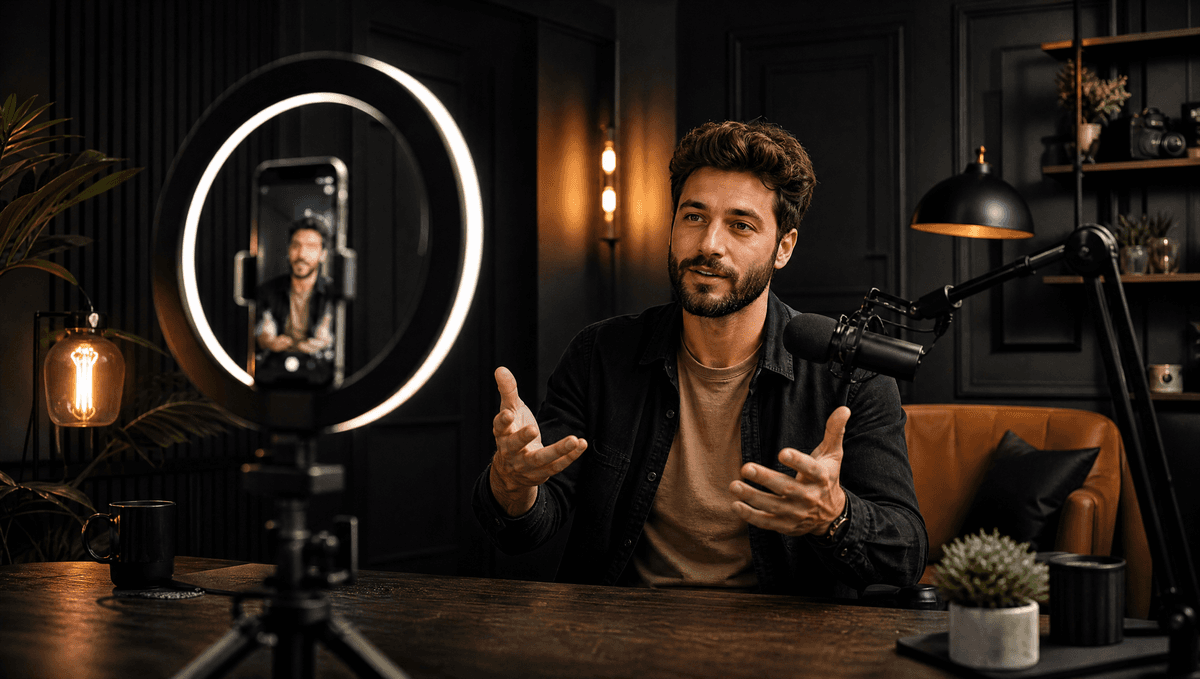
Marc Maron has recorded over 1,400 episodes of WTF with Marc Maron as an audio-only show. Now, after more than a decade, the show is adding video. This is not a pivot born from panic or trend-chasing. It is a calculated decision to expand distribution, increase discoverability and open new revenue streams without changing the format that built the audience in the first place.
If you run an established audio podcast and wonder whether cameras belong in your workflow, this move offers a clear signal. Video podcasting is not about replacing what works. It is about making what you already produce travel further, particularly through short-form clips on platforms where audiences now begin their listening journeys.
Why Established Audio Shows Are Adding Video Now
The podcast landscape has shifted. Discovery no longer happens primarily in podcast apps. It happens on YouTube, Instagram, TikTok and LinkedIn, where video snippets surface in feeds, autoplay in timelines and get recommended by algorithms trained to keep people scrolling.
WTF built its reputation through long-form conversation and loyal RSS subscribers. That audience remains. But younger listeners and casual browsers find shows differently. They watch a two-minute clip, then seek out the full episode. The clip is the trailer. The full show is the destination.
Adding video to an audio-first podcast is not about chasing views for vanity. It is about meeting listeners where their habits have moved. YouTube is the second-largest search engine globally. Podcast queries on the platform have grown year on year. A show that exists only in audio apps is invisible to a substantial and growing segment of the market.
When Video Makes Commercial Sense for Your Podcast
Not every show needs cameras. A solo commentary podcast recorded in a quiet room at home may gain little from a static webcam feed. But if your format includes guests, panel discussions or visual demonstrations, video expands what you can monetise and where your content can appear.
Consider these conditions. If three or more apply, video is worth the investment:
- Your episodes generate strong listener retention past the 20-minute mark, indicating depth that can be clipped into multiple segments.
- You feature guests who bring their own audiences and are willing to share video content across their channels.
- Your topic has visual appeal or benefits from seeing facial expressions, hand gestures or on-screen materials.
- You already have a production budget and adding cameras and lighting does not require a rebuild of your entire workflow.
- You can commit to a consistent clip strategy, publishing short vertical videos at least three times per week across social platforms.
Video podcasting does not require a television studio. It requires intention. The equipment matters less than the editorial discipline to turn a 60-minute conversation into five or six clips that each tell a complete micro-story.
How Podcast Clips Drive Discovery and Listener Growth
The full episode is rarely the entry point anymore. A listener discovers a 90-second Instagram Reel where a guest makes a provocative statement. They watch it twice, share it, then search for the show. That clip is doing the work a traditional podcast trailer used to do, but with vastly more reach because social algorithms reward video engagement.
Vertical video, formatted for mobile screens, performs especially well. A 16:9 landscape frame uploaded to TikTok or Instagram Reels will be letterboxed and ignored. A 9:16 portrait frame fills the screen and holds attention. The same content, reformatted, can triple view counts.
YouTube Shorts and TikTok prioritise watch time and completion rate. A three-minute clip that keeps 70 per cent of viewers to the end will be shown to exponentially more people than a ten-minute segment where half the audience drops off after 30 seconds. This is why clip length and editorial precision matter. You are not summarising the episode. You are isolating the moment that makes someone stop scrolling.
When WTF adds video, the back catalogue does not disappear. Audio episodes remain available. But future episodes can now be cut into clips, uploaded to YouTube as both long-form and Shorts, and shared natively on Instagram and TikTok. Each clip is a new chance for discovery. Each share extends the show's reach beyond its existing subscriber base.
What Actually Travels in Short-Form Podcast Clips
Not all podcast moments work as clips. Some topics require too much context. Others lack a visual hook. The clips that perform best share common traits: they present a clear opinion, deliver a surprising fact, or capture an emotional reaction.
A heated debate travels. A technical explanation of tax law does not, unless it is framed as a common mistake that costs people money. The content itself may be equally valuable, but one has inherent narrative tension and the other requires the viewer to already care.
Facial expressions and body language add weight. A guest laughing, pausing before answering, or leaning forward to make a point gives the clip texture that a static waveform cannot. This is why video podcasting has become the default for interview shows. The medium captures subtext.
Captions are non-negotiable. Most social video is watched without sound. If your clip relies on hearing the words, it will be skipped. Burned-in subtitles, styled to match your brand, ensure the content is accessible and algorithm-friendly. Platforms prioritise content that keeps users engaged, and captions measurably increase completion rates.
Building a Sustainable Workflow for Video Podcast Production
Adding video to a podcast does not mean hiring a film crew. It means setting up a repeatable system where recording, editing and distribution happen efficiently. The goal is to produce one episode and extract maximum value from it across multiple formats and platforms.
Start with the recording environment. A well-lit, acoustically treated space with two or three fixed camera angles removes most post-production complexity. You are not directing a drama. You are capturing a conversation. Consistency matters more than cinematic flair.
Record in the highest practical resolution, because you will crop and reformat the footage multiple times. A 4K source file allows you to punch in for close-ups, reframe for vertical aspect ratios and maintain sharpness when exporting to 1080p for different platforms. If you record at 1080p and then crop for Instagram, the result looks soft and amateur.
Organise your content calendar around clips, not just full episodes. If you publish one long-form video per week on YouTube, plan to release at least three short-form clips on other platforms between episodes. This keeps your show visible in feeds and increases the chances that a casual viewer becomes a subscriber.
Batch your clip production. When you finish editing the main episode, immediately identify five or six strong segments. Export them as standalone files, add captions, and schedule them across your social channels over the following week. Do not wait until you feel inspired. Make it a checklist step in your production process.
Where to Publish and How Platforms Differ
YouTube remains the primary destination for full video podcast episodes. The platform supports long-form content, has robust search and recommendation systems, and allows creators to monetise through ads and memberships. Upload the complete episode here, optimised with a keyword-rich title, a detailed description and accurate timestamps.
YouTube Shorts competes directly with TikTok and Instagram Reels. These are vertical videos under 60 seconds, designed for rapid consumption. Use Shorts to promote the full episode or to share standalone moments that work without additional context. The algorithm treats Shorts separately from long-form uploads, so a strong Shorts strategy does not cannibalise your main channel views.
Instagram Reels and TikTok prioritise entertainment and relatability over production polish. A slightly rough, authentic clip often outperforms a heavily edited segment. These platforms reward frequent posting, so aim for at least three clips per week if you want consistent reach.
LinkedIn works well for business and professional topics. A 90-second clip discussing industry trends or leadership challenges will often generate more meaningful engagement on LinkedIn than on Instagram, where the audience skews younger and more entertainment-focused. Tailor your clip selection to the platform.
Revenue Opportunities Video Podcasting Unlocks
Audio podcasts monetise through sponsorships, listener support and premium subscriptions. Video adds YouTube ad revenue, brand integrations that include on-screen product placement, and speaking or consulting opportunities that come from being seen, not just heard.
YouTube AdSense payments depend on watch time and audience geography, but a channel with 10,000 subscribers and consistent uploads can generate several hundred pounds per month without direct sponsorships. As the channel grows, that figure scales. A show with 100,000 subscribers and strong engagement can earn low five figures monthly from ads alone.
Sponsors increasingly request video placements because they can track performance more precisely. A mid-roll ad read in an audio podcast is effective, but a video segment where the host demonstrates a product and links directly to a purchase page provides measurable conversion data. Brands pay more for that transparency.
Video also increases the likelihood that your podcast leads to other income streams. Conference organisers, corporate training buyers and media producers often search YouTube when vetting potential speakers or collaborators. A polished video presence signals professionalism and reach in a way an audio feed cannot.
What This Means for Podcast Studios and Production Quality
Recording video in a home office is possible, but most shows benefit from a controlled environment built specifically for podcast production. Acoustic treatment, lighting rigs, multiple camera angles and professional audio equipment remove technical friction and ensure the output meets platform standards.
At THE LODGE Studios in London, we see this transition regularly. A show starts as audio, builds an audience, then reaches the point where video makes commercial sense. The host does not want to become a camera operator or lighting technician. They want to focus on the conversation and trust that the technical execution is handled.
We set up each session so the host and guest sit naturally, speak freely and never think about equipment. The video is captured from multiple angles, edited alongside the audio, and delivered as a full episode plus a set of optimised clips. This is not vanity production. It is infrastructure for audience growth and monetisation.
If you are running a podcast that could benefit from video but are not sure how to integrate it without disrupting your workflow, book a session and we will walk through what makes sense for your show, your audience and your goals.