Video Podcasting Cameras: What Actually Matters in 2025
Most podcasters waste money on camera specs they never use. Testing six setups for weekly video podcasting reveals what truly delivers professional…
A pattern has emerged across hundreds of video podcasts launched in the past eighteen months. The host records four episodes with a £3,000 mirrorless camera, then quietly switches to their iPhone for episode five. The production quality barely changes. The download numbers stay flat. Nobody mentions it.
This happens because the video podcasting conversation has become dominated by camera specifications whilst ignoring the actual conditions under which most shows are recorded. A recent camera comparison from Riverside tested six different setups for weekly podcasting, from webcams through to cinema cameras, and the results challenge nearly every assumption the industry repeats about video podcast production.
The central finding is straightforward: for the vast majority of podcasters recording conversational content in controlled indoor environments, sensor size and lens selection matter far less than autofocus reliability, consistent colour science and how quickly you can start recording when a guest arrives. Yet the market continues to push full-frame sensors and interchangeable lenses as though every episode were a documentary shoot.
The Reliability Problem Nobody Discusses
Professional video podcasting depends on one attribute above all others: the camera working correctly every single time you press record. Manual focus cameras fail this test immediately. A conversational podcast involves constant movement. Leaning forward for emphasis, gesturing, shifting position during a two-hour recording. Any setup requiring focus adjustment mid-conversation introduces a production overhead that kills momentum.
The Riverside testing found autofocus performance separated viable podcast cameras from expensive mistakes more decisively than resolution or dynamic range. An iPhone 15 Pro, using computational photography to track faces, maintained sharp focus through natural movement without operator intervention. A mirrorless camera with phase-detection autofocus performed similarly. A cinema camera with manual focus required constant monitoring and adjustment, transforming a two-person conversation into a three-person technical exercise.
This distinction becomes critical when you consider recording frequency. A podcast shot quarterly can justify manual focus and dedicated camera operation. A weekly show cannot. The maths simply does not work. Hiring an operator costs more than most podcasts generate in a year. Doing it yourself means splitting attention between the conversation and the viewfinder, which guests notice immediately.
Why Specs Mislead
Camera marketing emphasises sensor size, bit depth and frame rates because those specifications photograph well in comparison charts. They also happen to be the attributes that matter least for podcast production. A YouTube podcast strategy built around talking-head content shot indoors under controlled lighting gains virtually nothing from a full-frame sensor compared to a modern smartphone.
The testing data supports this. Colour accuracy, skin tone rendering and perceived sharpness showed minimal practical difference between an iPhone and a mirrorless camera when both were lit properly and compressed for web delivery. The mirrorless camera offered shallower depth of field, which some producers interpret as more cinematic. It also produced larger file sizes, longer processing times and required lens changes to adjust framing.
Depth of field itself deserves scrutiny. The blurred background achieved with a wide-aperture lens looks impressive in isolation but serves no functional purpose in podcast content. The viewer watches to hear the conversation, not to admire bokeh. Excessively shallow focus can actually harm clarity by throwing ears or hands out of focus during natural gestures. Yet podcasters continue buying expensive glass to achieve an aesthetic that adds no value to their format.
What genuinely matters is consistent exposure across a two-hour recording as ambient light changes, accurate white balance that does not shift between cuts, and enough resolution to crop or reframe in post-production without quality loss. A £600 camera handles these requirements as reliably as a £6,000 body, provided you understand the basics of indoor lighting.
The Lighting Inversion
Here is the uncomfortable truth the camera industry avoids: lighting determines image quality far more than the camera itself. The Riverside tests conducted under controlled studio conditions minimised this variable, but real podcast recording rarely happens in optimised environments. Home offices, co-working spaces, borrowed meeting rooms. The camera must perform wherever the conversation needs to happen.
Expensive cameras offer better low-light performance, but low light is precisely the condition you should never accept for video podcasting. Shooting in dim environments to showcase a camera's high ISO capability produces noisy, flat images that look amateurish regardless of sensor size. A £200 LED panel and a £600 camera will outperform a £6,000 camera in natural light every single time.
This inverts the normal purchasing logic. Most creators buy the best camera their budget allows, then add lighting if money remains. The correct sequence is the opposite: budget for proper lighting first, then select the cheapest camera that autofocuses reliably. This approach produces objectively better results and costs substantially less, but it requires accepting that the camera itself contributes less to the final image than most people assume.
The Practical Minimum
If you strip away marketing and focus purely on functional requirements, a video podcasting camera needs to deliver four things reliably:
- Continuous autofocus that tracks faces through natural movement without hunting or losing lock
- Consistent colour science that renders skin tones accurately across different lighting conditions
- Overheating protection that allows two-plus hour recordings without shutdown or quality degradation
- File formats and codecs that integrate smoothly with standard editing software without transcoding delays
Notice what is absent from that list: sensor size, frame rate options above 30fps, LOG profiles, interchangeable lenses, HDMI output. These features add cost and complexity without improving the core product for most conversational podcast formats. They matter enormously for narrative content, documentary work or productions with dedicated camera operators. They represent expensive distractions for a two-person conversation recorded weekly.
The Riverside comparison included a Sony mirrorless camera, often recommended for podcasting, and found it delivered excellent results but required significantly more setup time and technical knowledge than smartphone alternatives. That trade-off makes sense for productions with dedicated technical staff. For the consultant recording a weekly interview series between client calls, it represents friction that eventually leads to skipped episodes.
Format Determines Function
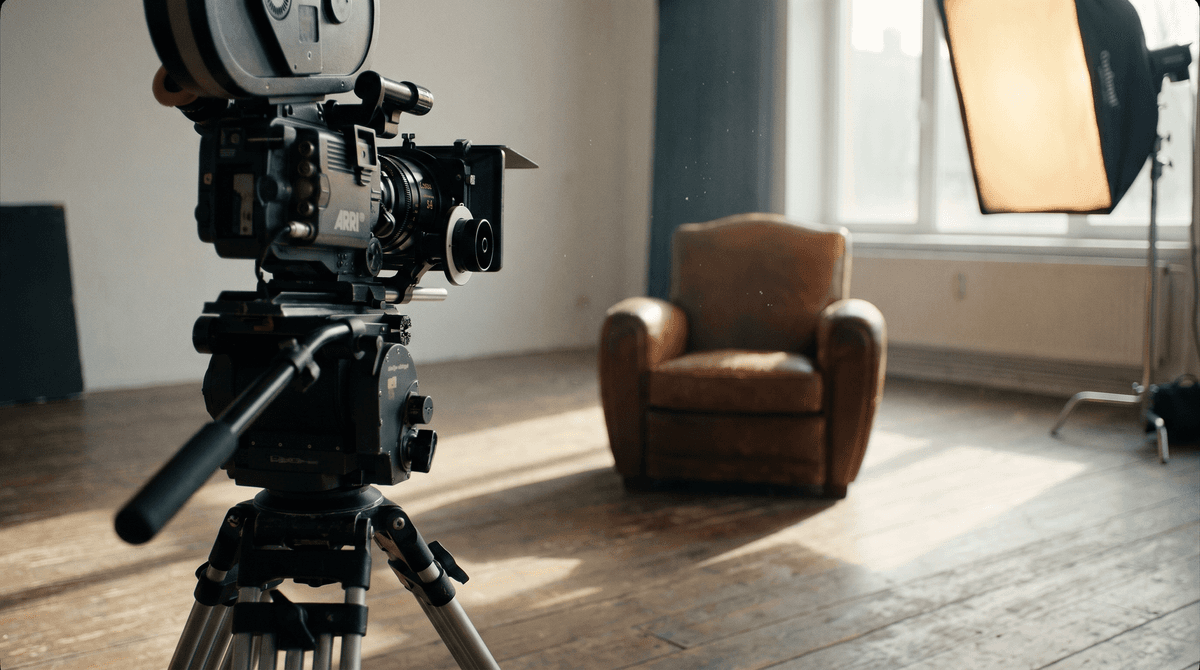
The broader pattern here is that podcasters adopt cinema camera workflows for a format that resembles television production far more closely. A narrative short film benefits from shallow focus, manual exposure control and RAW recording. A conversation benefits from set-it-and-forget-it reliability and fast turnaround.
Television solved this problem decades ago with cameras optimised for multi-hour studio recording, autofocus during live broadcasts and colour profiles that require minimal grading. The podcast industry keeps rediscovering these requirements whilst pretending they need cinema tools. The mismatch explains why so many video podcasts look technically impressive for three episodes then quietly disappear.
Sustainability matters more than peak quality. A show recorded consistently with an iPhone will build a larger audience than a show recorded beautifully with a RED camera four times then abandoned when the operator gets tired of the setup time. Listener retention data supports this: audiences tolerate modest technical limitations far more readily than they tolerate irregular publishing.
The strategic implication is that podcasters should optimise for consistency rather than ultimate quality, then invest the time saved into better questions, tighter editing and smarter promotion. A camera that works reliably every week serves that goal. A camera that produces marginally better images but requires troubleshooting serves no one.
Where Professional Equipment Actually Helps
None of this argues against professional cameras in contexts where their capabilities matter. Multi-camera shoots covering live events, productions with dedicated technical crews, formats requiring slow-motion or specialist optics. These applications justify the cost and complexity because they demand features smartphones cannot provide.
The issue is the industry applying these workflows to formats that do not require them. A podcast studio London session with two people at a table needs different tools than a documentary following subjects through varied locations. Pretending otherwise wastes money and creates production overhead that eventually kills the show.
The Riverside testing methodology itself illustrates the point. They evaluated cameras specifically for weekly podcast production, not general video creation. That focus revealed that mid-range options performed as well as premium bodies for this specific use case, a finding that should reshape how podcasters budget production equipment.
The Next Decision Point
Video podcasting continues evolving toward longer, more frequent episodes as platforms prioritise watch time over view counts. This trend favours cameras that handle extended recording without overheating, maintain autofocus accuracy across multi-hour sessions and produce files that edit quickly on standard hardware. None of these requirements correlate strongly with price.
The podcasters who succeed in this environment will be those who understand their format deeply enough to reject equipment they do not need. A £600 camera, £300 in lighting and £100 in audio equipment will outperform a £3,000 camera with natural light and laptop audio every time. The budget allocation matters more than the total spent.
Recording quality determines whether audiences stay through the full episode or click away after two minutes. But recording quality emerges from lighting, framing, audio clarity and edit pacing far more than from camera specifications. A sharp image of a poorly-lit subject reading questions off a laptop screen serves nobody. A moderately sharp image of a well-lit, engaged conversation builds audiences.
This is where professional recording environments provide value that equipment purchases cannot match. A properly designed studio handles lighting, acoustics, framing and monitoring so the host can focus entirely on the conversation. The camera becomes a component in a system rather than the system itself, which is precisely what allows consistent weekly production.
Our team at THE LODGE Studios see this reality play out constantly. Clients arrive with expensive cameras and uncertain results. The studio environment transforms their footage not through better equipment but through controlled conditions that let modest cameras perform optimally. That pattern holds across hundreds of recordings.
If you are recording a regular show and spending more time troubleshooting equipment than preparing questions, the problem is not your camera. It is that you have optimised for the wrong variable. Book a session at a properly equipped facility, see what consistent results actually look like, then build your own setup around reliability rather than specifications. You can start with a recording session here to establish that baseline.
The camera conversation in podcasting needs to mature past sensor size and bokeh into what actually makes a show sustainable to produce and compelling to watch. The testing data shows the path clearly. Whether the industry follows it remains to be seen.