Six Podcast Formats Business Owners Should Know in 2025
Most business podcasts fail because they pick the wrong format for their goals. Discover six proven podcast formats with honest trade-offs for different…
Riverside's latest guide highlights six podcast formats that have proven themselves across thousands of shows, and the timing matters. Business owners launching shows in 2025 face a listener who skips within thirty seconds if the format does not match the promise. The guide breaks down interview, solo, panel, conversational, narrative and hybrid formats with practical trade-offs for each. For business owners considering a podcast or looking to fix a stalling show, understanding which podcast format aligns with your goals, team capacity and audience expectations now determines whether the show builds authority or becomes another abandoned feed.
Why Format Choice Determines Success Before You Record
A podcast format is not stylistic decoration. It is the structural decision that dictates production time, guest coordination, scripting load and listener retention. Most business podcasts default to the interview format because it feels safe and familiar, but that choice often mismatches the actual business goal. If your objective is positioning yourself as a trusted advisor, the solo format delivers faster. If your goal is cross-industry visibility, the panel format opens doors interviews cannot. The Riverside guide makes clear that format is a strategic lever, not an afterthought, and choosing poorly costs months of effort with minimal return.
The mistake happens early. A consultant books five guests, records five interviews, then realises editing and scheduling eat ten hours per episode. A founder wants to teach a methodology but structures every episode as a conversation, leaving listeners confused about the actual steps. The format you choose must match your production capacity, your message architecture and the problem your audience needs solved. Riverside's breakdown gives business owners the trade-offs upfront, which is rare in podcast advice that typically romanticises the medium without addressing the operational reality.
The Six Core Podcast Formats and Their Business Applications
The interview podcast format remains the most common because it scales authority by association. You bring on experts, ask structured questions and your show becomes a hub for industry voices. The strength is guest reach and the efficiency of letting someone else supply the expertise. The weakness is coordination overhead and the risk that your show becomes a passive host role rather than a point of view. Interview podcasts work best when you have strong guest access, a clear niche and the capacity to manage scheduling, prep and follow-up consistently. For business owners, this format suits those building a network or positioning as a connector rather than the sole expert.
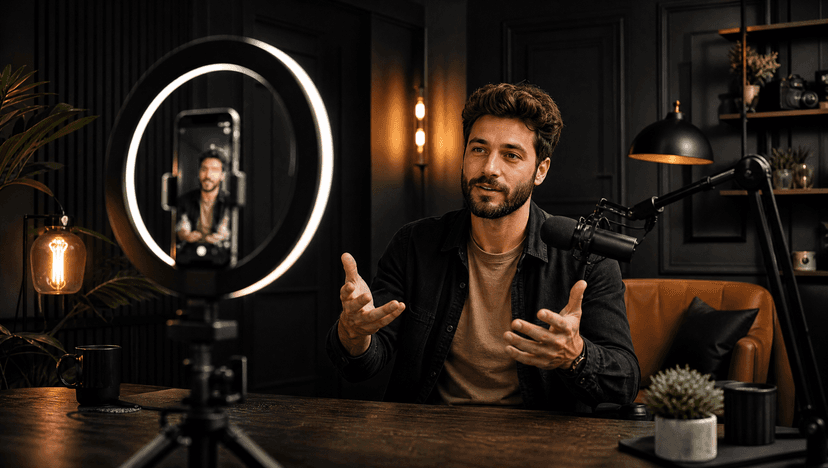
The solo podcast format is the inverse. One voice, one perspective, full control. You script or outline your content, record alone and edit without coordinating anyone else. The Riverside guide notes this format demands confidence and clarity because there is no guest to carry the conversation. Solo podcasts work brilliantly for teaching, commentary and thought leadership when you have a methodology to explain or a weekly take on industry trends. The production timeline is faster, the message is tighter and your authority compounds with every episode because listeners associate the insight directly with you. The trade-off is creative stamina. Recording alone for twenty minutes every week requires discipline and a clear content plan.
The panel discussion format brings multiple voices into one conversation, often with a moderator steering the discussion. This format excels at exploring a topic from several angles and creating dynamic energy that a single voice cannot achieve. Business owners use panel formats to position their brand at the centre of industry debate or to showcase internal team expertise. The challenge is coordination complexity and the risk of uneven participation where one panellist dominates or another stays silent. Successful panel podcasts require a confident moderator and clear segment design to ensure every voice contributes without the episode devolving into cross-talk.
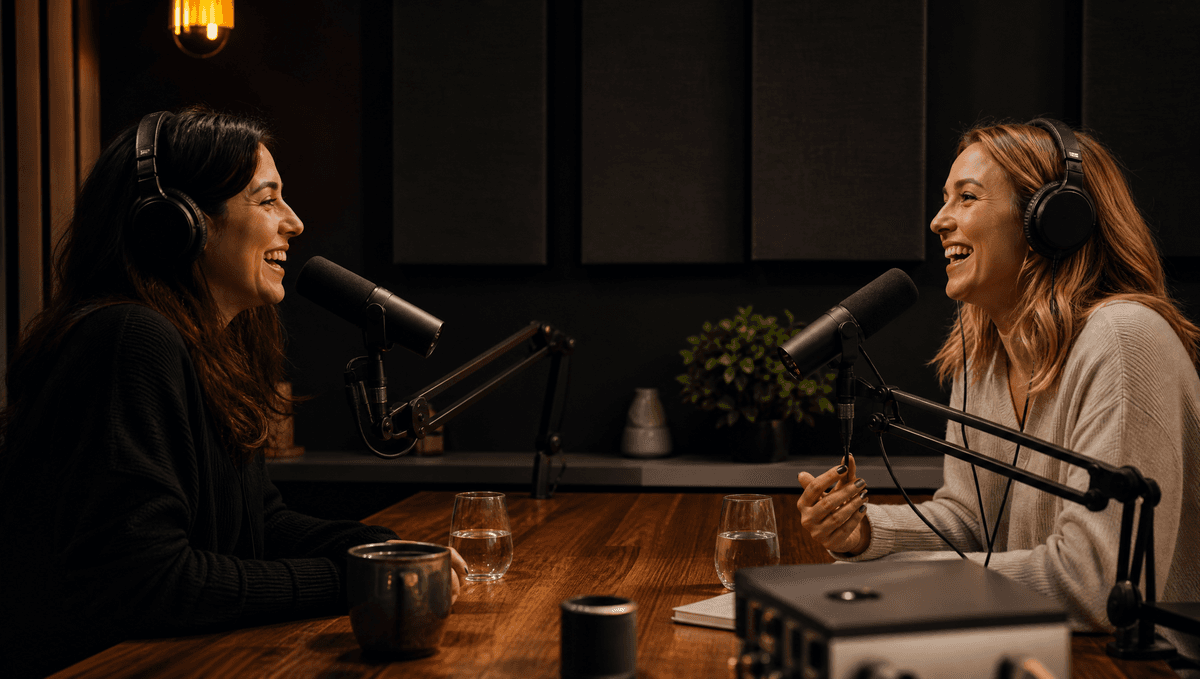
The conversational format, sometimes called co-hosted, features two people discussing a topic without a formal interview structure. This format feels relaxed and builds rapport quickly, which makes it effective for brand podcasts where the relationship between hosts is part of the appeal. The Riverside guide highlights that conversational podcasts often struggle with pacing because neither host owns the structure outright. The format works best when both co-hosts have clear roles, complementary expertise and a shared understanding of episode goals. For business owners, this format suits partnerships or internal teams where the chemistry is genuine and the dynamic itself delivers value.
The narrative podcast format is scripted storytelling, often with production layers like sound design, music and interview clips woven into a linear story. This format demands the highest production investment but delivers immersive content that stands apart in a crowded feed. Business owners rarely start here, but brands with case studies, transformation stories or complex customer journeys find the narrative format powerful for deeper engagement. The trade-off is time and skill. A ten-minute narrative episode can require twenty hours of scripting, recording and editing. The Riverside guide positions narrative as an advanced choice, not a beginner format.
The hybrid format combines elements from multiple structures. An episode might open with solo commentary, transition into an interview and close with a co-hosted discussion segment. Hybrid formats offer flexibility and variety, which can keep long-running shows fresh. The risk is structural confusion if the transitions are not clear or if the format shifts too often between episodes. Hybrid works best when a show has found its core format and wants to experiment without abandoning what already succeeds. For business owners, hybrid is a refinement tool, not a launch strategy.
Matching Podcast Format to Business Goals
The Riverside guide stops short of prescribing one format as universally better, which is the correct stance. The right podcast format depends entirely on your specific business objective and operational capacity. If your goal is lead generation through authority positioning, the solo format delivers the clearest path because every episode reinforces your expertise without dilution. If your goal is industry visibility and network expansion, the interview format opens conversations and relationships that solo content cannot. If your goal is demonstrating internal team depth or cross-functional collaboration, the panel or conversational format showcases that dynamic directly.
Consider a management consultant who wants to establish a reputation for practical strategy. The solo format allows them to break down frameworks step by step, with each episode building a library of actionable content. An interview format would scatter that focus across different guests and topics. Conversely, a leadership coach building a community around peer learning benefits from the interview format because each guest brings a new case study and expands the network effect. The same show topic, two different formats, entirely different outcomes.
Production capacity matters as much as business goals. A founder running a lean operation who records between client calls cannot sustain a panel format that requires coordinating three schedules and moderating live dynamics. That founder needs a solo or conversational format with a co-host they trust. A marketing team with dedicated production support can handle the narrative format's scripting and editing demands. The Riverside guide implies this reality without labouring it, the podcast format you can actually produce consistently always outperforms the ideal format you abandon after three episodes.
Practical Steps for Choosing and Executing Your Podcast Format
- Define your business goal before you define your format. Write down whether you need authority, visibility, lead generation, network building or brand differentiation. The format follows the goal, not the other way around.
- Audit your production capacity honestly. Count the hours you can commit weekly to recording, editing, guest coordination and promotion. Choose a format that fits that reality, not an aspirational version of your schedule.
- Test one format for ten episodes before switching. Format consistency builds listener expectations and makes your show easier to recommend. Jumping between formats early confuses your audience and fragments your learning curve.
- Script your structure even if the format feels conversational. Write out the opening, the transitions, the core segments and the close. Loose structure creates tight delivery, no structure creates rambling content.
- Record a pilot episode in two different formats and listen critically. Assess which version feels natural to deliver, holds your attention and communicates your message clearly. Your comfort in the format directly affects listener engagement.
- Plan your content calendar around your format constraints. If you choose interviews, build a guest pipeline three months deep. If you choose solo, batch your content planning and record multiple episodes in one session to maintain consistency.
What the Format Decision Reveals About Podcast Strategy
The Riverside guide represents a broader shift in podcast advice, moving from inspiration to operational clarity. Business owners no longer need encouragement to start a podcast, they need honest guidance on making it sustainable and effective. The podcast format conversation is where that honesty begins. Every format demands different skills, time and creative energy. The solo format requires you to hold attention alone. The interview format requires you to research guests and facilitate insight. The narrative format requires you to structure story arcs and manage production complexity. None of these are trivial skills, and pretending they are sets up new podcasters for frustration.
What matters now is alignment. The format must align with your business model, your team structure and your audience's consumption behaviour. A fast-moving founder serving time-poor executives needs a format that delivers insight in fifteen minutes. A storytelling brand serving engaged consumers can invest in longer, produced episodes. The format is not about your preference, it is about what serves the listener and what you can deliver at high quality every single week. Riverside's framework gives business owners permission to choose strategically rather than following trends or imitating popular shows in unrelated niches.
Looking forward, podcast formats will continue diversifying as video integration and platform algorithms reward different content shapes. YouTube prioritises watch time, which favours longer conversational or interview formats with strong visual elements. Spotify's algorithm rewards completion rate, which favours tighter solo or narrative formats that listeners finish in one session. The business owner launching a podcast in 2025 must consider not just the format itself but how that format performs across the platforms their audience uses. The Riverside guide does not address platform distribution directly, but the implication is clear: format choice now intersects with distribution strategy in ways it did not three years ago.
Recording Quality as the Foundation Beneath Any Format
No podcast format succeeds without clean, professional audio. The interview format loses credibility when the guest sounds distant or muffled. The solo format feels amateurish when room echo competes with your voice. The narrative format demands layered production that cannot hide poor source recordings. Business owners often fixate on format choice while underinvesting in recording quality, then wonder why the show does not convert listeners into clients. The format gets them to press play, but the production quality determines whether they subscribe and share.
Professional recording space and equipment eliminate the variables that sabotage even well-formatted content. We see this repeatedly at THE LODGE Studios in London, where business owners arrive with strong content plans but no understanding of how microphone placement, acoustic treatment and gain staging affect perceived authority. A solo podcast recorded in a treated room with proper monitoring sounds confident and clear. The same content recorded on a laptop microphone in a home office sounds tentative and unfinished. The format amplifies the quality, it does not compensate for its absence.
If you are ready to match your podcast format with the production quality it deserves, book a session at THE LODGE Studios in London. Our team handles the technical setup so you can focus entirely on delivering your content, whether that is a solo episode, a panel discussion or a full narrative production. We work with business owners and brands who understand that consistent, professional recording builds the authority their format promises. Reserve your session at https://book.thelodgestudios.co.uk and start producing a show that matches your business goals, not just your best intentions.