Why Podcast App Consolidation Means You Need Your RSS Feed More Than Ever
Maple Media's fourth podcast app acquisition shows platform consolidation is accelerating. Here's how to protect your show and control distribution…
Maple Media has acquired Castro, marking its fourth podcast app purchase in a consolidation wave that quietly reshapes how listeners find and consume shows. When platforms merge, features vanish, user bases shift, and discovery algorithms change overnight. For podcast creators who depend on listener apps to deliver episodes, this matters more than most realise. The protection is simple but critical: own your RSS feed, distribute it yourself, and treat every platform as rented ground.
This article explains why podcast app consolidation makes RSS feed ownership non-negotiable, how to future-proof distribution across social platforms where discovery actually happens now, and what vertical video, clips and short-form content mean for keeping control of your audience.
The Real Cost of Platform Consolidation
When one company buys multiple podcast apps, the immediate concern is choice. Fewer independent platforms mean less competition, slower innovation, and a higher risk that your preferred listening experience disappears. Castro users now join Maple Media's ecosystem alongside other acquired properties, and history shows that post-acquisition integration rarely preserves every feature that made an app distinct.
The deeper issue is control. If a listener discovers your show through a single consolidated app, that platform sits between you and your audience. It controls playback data, recommendation algorithms, and whether your episodes surface in search. If the platform decides to prioritise shows with exclusive deals, adjust its editorial policy, or simply shut down, your connection to those listeners weakens or breaks entirely.
RSS feed ownership is the counterweight. An RSS feed is the technical backbone of podcast distribution. It lives on a server you control, or at minimum a hosting provider you choose. Every podcast app, from Spotify to Apple Podcasts to niche independents, reads from that feed. When you own the feed, you decide where it goes. If one platform consolidates out of existence, you redirect listeners to another without losing episodes, metadata or subscriber lists.
What Happens When You Don't Own Your Feed
Some hosting platforms retain ownership of the RSS feed URL. If you leave that host, the feed stays behind. Redirecting it to a new provider requires the old host's permission, and not all grant it. Listeners subscribed through the old feed hear nothing new until they manually resubscribe, and most never will.
Consolidation accelerates this risk. As platforms merge, hosting terms change. A service that once offered full feed portability might integrate with a parent company's proprietary system. The migration path you assumed existed disappears, and your audience splits across incompatible platforms.
How Social Platforms Changed Podcast Discovery
Podcast apps remain important for regular listeners, but discovery increasingly happens elsewhere. YouTube, TikTok, Instagram and LinkedIn drive far more new audience growth than podcast directories. A sixty-second vertical video on Instagram Reels pulls in listeners who would never open a podcast app to browse categories. A three-minute clip on YouTube shorts introduces your perspective to viewers already consuming video content. This is where attention lives now, and it requires a fundamentally different distribution approach.
Social discovery is clip-first. A full forty-minute episode is raw material. The discovery asset is the eight compelling seconds that stop a scroll, the twenty-second exchange that demonstrates expertise, or the ninety-second story that feels complete on its own. These clips live independently of the podcast feed. They are posted natively to each platform, optimised for that platform's format, and designed to send viewers to the full episode only after they are already invested.
Vertical Video and Platform-Specific Formats
Vertical video, shot in 9:16 aspect ratio, is the default for TikTok, Instagram Reels, YouTube Shorts and even LinkedIn's video feed. Horizontal video works for YouTube's main feed and long-form content, but the short-form discovery layer is vertical. If your podcast is recorded with video, the framing needs to accommodate both.
Platform-specific formatting extends beyond dimensions. TikTok prioritises tight edits, text overlays and trending audio. Instagram favours polished visuals and stronger branding. YouTube Shorts rewards punchlines and clear value propositions in the first three seconds. LinkedIn responds to industry insight and practical takeaways. The same thirty-second clip performs differently depending on how it is cut, captioned and positioned.
Turning Episodes Into Short-Form Content That Travels
The process of extracting clips from full episodes is straightforward in theory and demanding in execution. The work is editorial, not technical. You are identifying the moments that work independently, then shaping them into standalone pieces that make sense without context.
- Watch or listen to the full episode with a notebook. Mark any moment that feels quotable, surprising, actionable or emotionally resonant. These are your candidate clips.
- Pull each candidate into an editing tool. Trim to the shortest version that still makes sense. If the clip needs more than ten seconds of setup, it is probably not a short-form piece.
- Add text overlays for key phrases. Platforms autoplay video without sound. The overlay ensures the point lands even if the viewer never turns audio on.
- Test vertical and horizontal crops. If the video was shot in 16:9, reframe it to 9:16 by cropping or zooming. Confirm that faces stay centred and any on-screen text remains legible.
- Write platform-specific captions. A YouTube Short caption can include a longer description and a link. A TikTok caption is shorter, conversational, and uses hashtags sparingly. Instagram Reels captions focus on the first line, because the rest is hidden behind a tap.
- Post the clip natively to each platform. Do not rely on cross-posting tools that upload once and syndicate everywhere. Native uploads perform better in every algorithm.
- Direct viewers to the full episode in a pinned comment, bio link, or call to action at the end of the clip. The clip's job is to create interest. The full episode delivers depth.
This workflow produces a library of short-form assets from every episode. A single forty-minute recording might yield six to ten clips, each optimised for a different platform and audience segment. The clips exist independently of the RSS feed, but they all point back to it. When podcast app consolidation disrupts one channel, your social distribution continues unaffected.
Why RSS Independence and Social Distribution Work Together
Owning your RSS feed protects the podcast itself. Social distribution protects discovery. The two strategies are not alternatives; they are layers of the same system.
An independent RSS feed ensures that wherever listeners subscribe, you control the destination. If Apple Podcasts changes its recommendation algorithm, your feed still delivers episodes to existing subscribers. If a consolidated app shuts down, you migrate listeners to another platform without rebuilding from zero. The RSS feed is infrastructure. It carries your content regardless of which app or service sits on top.
Social platforms are marketing channels, not distribution infrastructure. They amplify reach, drive discovery, and introduce your show to audiences who would never find it in a podcast directory. But they do not replace the feed. A viral TikTok clip brings thousands of new viewers. The RSS feed converts those viewers into regular listeners by giving them a consistent place to return.
The Practical Workflow for Feed Ownership
Owning your feed begins with choosing a podcast host that grants full portability. Services like Transistor, Captivate, and RedCircle all allow you to export your feed URL and redirect it to a new provider if you leave. Confirm this in writing before uploading your first episode.
Once hosted, submit your feed to every major podcast directory: Apple Podcasts, Spotify, Google Podcasts, Pocket Casts, Overcast, and any other platform your audience uses. Submission is free and takes minutes per directory. The feed URL remains yours, and each directory simply indexes it.
If you ever migrate hosts, update the feed redirect at the old provider. Subscribers in every directory will automatically receive new episodes from the new host without resubscribing. This continuity is what RSS independence protects.
What Consolidation Means for the Next Twelve Months
Maple Media's fourth acquisition will not be the last. Venture capital funding in the podcast space has slowed, and smaller platforms either consolidate or close. The number of independent listening apps is shrinking, and the remaining players are integrating with larger media companies or pivoting to features that prioritise monetisation over listener experience.
For creators, this environment makes diversification essential. Relying on a single platform for distribution or discovery introduces fragility. RSS ownership provides technical independence. Social clip distribution provides audience resilience. Together, they insulate your show from the decisions that platform owners make without consulting you.
The immediate actions are clear. Verify that you own your RSS feed and can redirect it. Set up a clip production workflow that turns every episode into short-form content for TikTok, Instagram, YouTube and LinkedIn. Treat podcast apps as one channel among many, not the foundation of your entire strategy.
Recording for RSS and Social From the Start
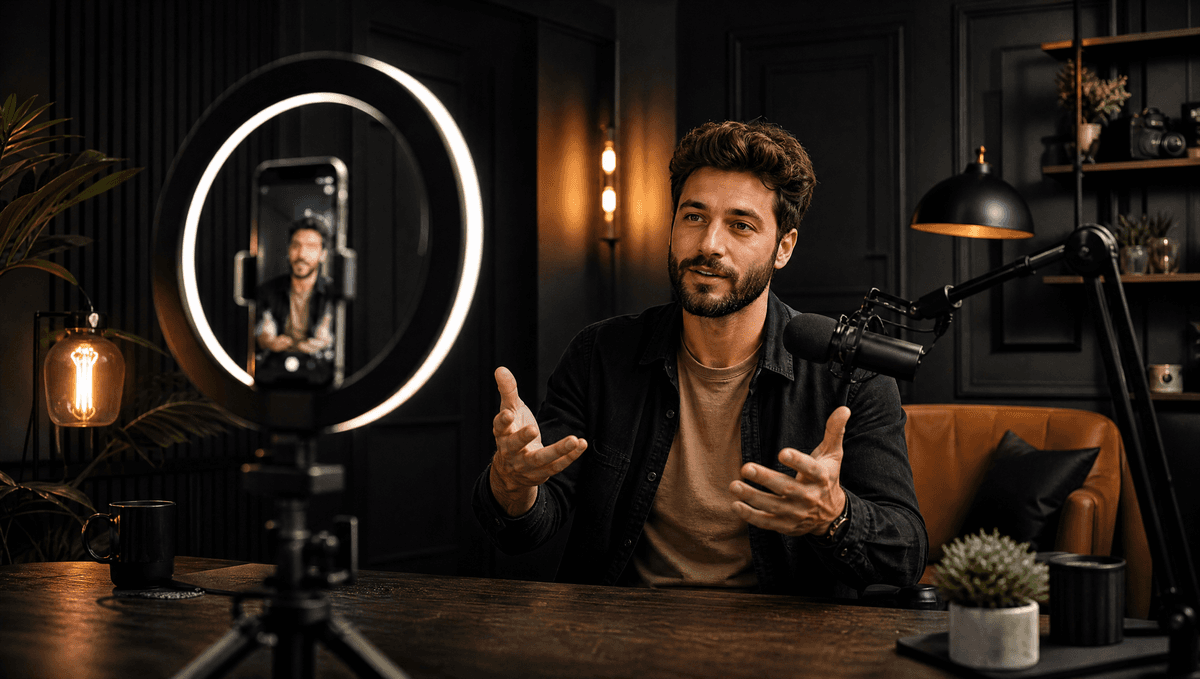
The best time to plan for multi-platform distribution is before you record. If your podcast includes video, shoot in a resolution and framing that supports both horizontal and vertical crops. Centre the subject in a way that works in 9:16 without cutting off heads or losing visual context.
Structure episodes with clips in mind. A tightly edited forty-minute conversation produces more usable short-form content than a meandering two-hour session. Plan segments that feel complete in three to five minutes, so editors have natural break points to work with.
At THE LODGE Studios in London, we record in 4K with framing that supports horizontal and vertical formats. Every session is captured with broadcast-grade audio and multi-camera angles, so post-production can reframe shots without quality loss. Whether you are publishing full episodes to an RSS feed or cutting sixty-second reels for Instagram, the source material determines what is possible later. Book a session at https://book.thelodgestudios.co.uk and start with the technical foundation that supports every distribution channel you will ever need.