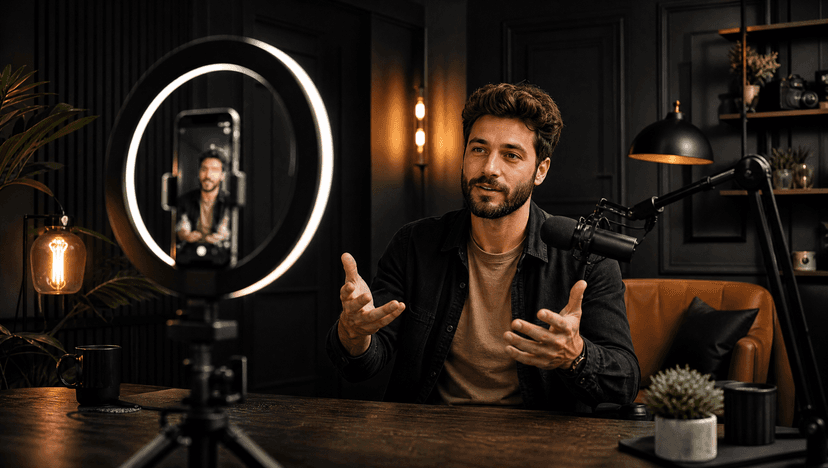
AI Clip Tools Are Commoditising: Why Strategy Beats Features in 2026
Ten Opus Clip alternatives prove AI podcast clipping is now table stakes. Strategy, not software, separates content that converts from content that…
Riverside recently published a detailed comparison of ten Opus Clip alternatives, testing each platform's AI clipping capabilities, accuracy and output quality. The piece is thorough, feature-rich and genuinely useful. It is also evidence of something more significant: AI podcast clipping has become a commodity. When ten credible options exist for the same task, the technology itself stops being the competitive edge. What you do with the clips matters far more than which platform generated them.
This matters because business podcasters, consultants and B2B brands are still making purchasing decisions as though the tool is the strategy. They compare auto-captioning accuracy percentages, aspect ratio presets and export speeds. Meanwhile, their competitors are asking different questions: which fifteen seconds will make someone care, how does this clip ladder into a broader content system, and what happens after the view count ticks up. The gap between those two approaches is widening.
The Feature Plateau Has Arrived
Five years ago, automatic video clipping from long-form podcast episodes was novel. Tools like Opus Clip, Descript and others introduced AI-driven scene detection, virality scoring and batch exports. Early adopters gained an advantage simply by moving faster than manual editing allowed. Today, that advantage has evaporated. Nearly every serious podcast video platform now offers some version of AI clipping, often with comparable accuracy.
The Riverside article tested ten alternatives across pricing, language support, platform integrations and export flexibility. What emerges from that analysis is not a clear winner but a field of similar capabilities. Some platforms handle multi-speaker detection slightly better. Others offer more granular control over caption styling. A few integrate directly with scheduling tools. These are real differences, but they are incremental. None of them changes what a clip fundamentally does or whether an audience will engage with it.
When technology reaches this plateau, the return on optimisation shrinks. Spending three hours comparing transcription accuracy between Tool A and Tool B yields marginal gains. Spending those same three hours developing a coherent content distribution strategy yields exponential ones. Yet the former still dominates how podcasters allocate attention, partly because software feels like a decision you make once, while strategy feels like work you repeat forever.
What Actually Separates a Clip That Works
A podcast clip that drives measurable business outcomes does three things. It delivers a complete thought in under ninety seconds. It creates a reason for someone unfamiliar with the show to care about the speaker. It directs that new attention somewhere specific, whether that is a newsletter signup, a service page or the full episode. Most AI-generated clips do none of these things, regardless of which platform produced them.
The virality score features common across these tools attempt to predict engagement, usually by analysing factors like speech pace, keyword density and tonal variation. These scores are useful as rough filters. They are not useful as final arbiters of what to publish. A clip can score highly because it contains an energetic exchange or a surprising statement, but if that moment requires fifteen minutes of prior context to make sense, it will not convert. Conversely, a quieter segment explaining a single counterintuitive idea can outperform flashier content because it stands alone.
Strategy begins with asking what the clip needs to accomplish before the software suggests what it thinks will perform. If the goal is to establish authority in a specific niche, the clip should showcase depth on a problem that niche faces, not general enthusiasm. If the goal is lead generation, the clip should create an open loop that the full episode or a lead magnet resolves. If the goal is simply awareness, the clip should introduce the host's perspective in a way that makes their worldview clear within thirty seconds. These are editorial decisions, not technical ones, and no AI score can make them for you.
An illustrative example: a business consultant records a sixty-minute episode on pricing strategy. The AI tool surfaces a clip where the guest laughs and says pricing is broken in their industry. The clip gets modest engagement but no clicks through to the episode. A manually selected clip, where the guest explains one specific pricing mistake and why it happens, generates a third of the views but five times the conversion rate. The difference is not video quality or caption accuracy. The difference is that one clip answered a question and the other simply indicated that questions exist.
How to Build a Clipping Process That Compounds
If the tool no longer differentiates, the process does. A sustainable content system built around podcast clips requires three layers: selection criteria, distribution logic and feedback loops. Most podcasters stop after exporting the file.
Selection criteria means deciding in advance what makes a clip worth publishing. This is not about virality scores. It is about whether the segment advances a specific content pillar, whether it works without prior context, and whether it aligns with what the brand is known for or wants to be known for. A health tech startup should not publish clips about general productivity hacks, even if the conversation was engaging, because it trains the audience to expect the wrong thing. Criteria narrow the field before distribution begins, which saves time and prevents content drift.
Distribution logic means knowing where each type of clip performs and why. LinkedIn favours analytical clips that challenge conventional thinking. Instagram Reels reward faster cuts and clearer visual hooks. YouTube Shorts benefits from educational content that feels like a shortcut. TikTok tolerates longer setups if the payoff is emotionally resonant. These are generalisations, but they matter because posting the same clip across five platforms without adaptation is a signal that strategy has not been applied. Adaptation does not require re-editing. It often just requires rewriting the caption or adjusting the thumbnail to match how that platform's audience browses.
Feedback loops mean tracking what happens after publication and letting that data inform future selection. If clips about case studies consistently drive more profile visits than clips about theory, make more case study clips. If shorter clips underperform longer ones, test why. If a particular guest's insights generate stronger engagement than others, prioritise that guest's content in the next recording cycle. This requires simple tracking, often just a spreadsheet noting topic, length, platform and one meaningful metric like click-through rate or comments that ask a follow-up question. The pattern reveals itself over eight to twelve weeks.
Here is what that looks like as a checklist:
- Define three content pillars the podcast serves and confirm each clip maps to one of them before export.
- Select clips based on whether they deliver a complete, context-free idea in under ninety seconds.
- Write platform-specific captions that reframe the same clip for different audience expectations.
- Track one engagement metric and one conversion metric per clip, nothing elaborate.
- Review performance monthly and adjust selection criteria based on what actually moved the business forward.
This is not complicated. It is also not automatic. The gap between the two is where most podcast content strategies fail.
Where Clipping Fits Inside a Broader System
AI clipping tools, regardless of which of the ten alternatives you choose, are extraction mechanisms. They pull moments from long-form content. What they do not do is create a content system. That system is what turns a pile of clips into a sustainable audience-building engine.
A content system means the full episode, the clips, the email newsletter, the LinkedIn post and the lead magnet all reinforce the same core ideas in different formats. A clip introduces a concept. The full episode explores it. The newsletter applies it. The lead magnet gives a framework for implementing it. Each piece works alone but compounds when consumed together. This is how you turn podcast listeners into clients, not by optimising caption font size but by making every content touchpoint part of a coherent argument.
The Riverside article on Opus Clip alternatives is valuable because it removes the guesswork around which tools are credible. What it cannot do is tell you whether your clips are serving a strategy or just filling a content calendar. That distinction is what separates a podcast that generates inbound enquiries from one that generates views and nothing else.
Podcasting in 2026 is heading toward more video, more short-form distribution and more AI-assisted production. All of those trends make content easier to create and harder to make matter. The brands that will succeed are the ones treating clips as part of a system, not as the output of a tool. They will choose platforms based on workflow fit, not feature lists, because they understand the work happens after the clip exports.
What This Means for Recording Quality and Production
None of this clipping strategy works if the source material is inconsistent. AI tools can identify engaging moments, but they cannot create them. If the original recording suffers from poor audio balance, visual distractions or unclear messaging, every clip extracted from it inherits those weaknesses. This is where production quality stops being a nice-to-have and becomes a prerequisite for effective content distribution.
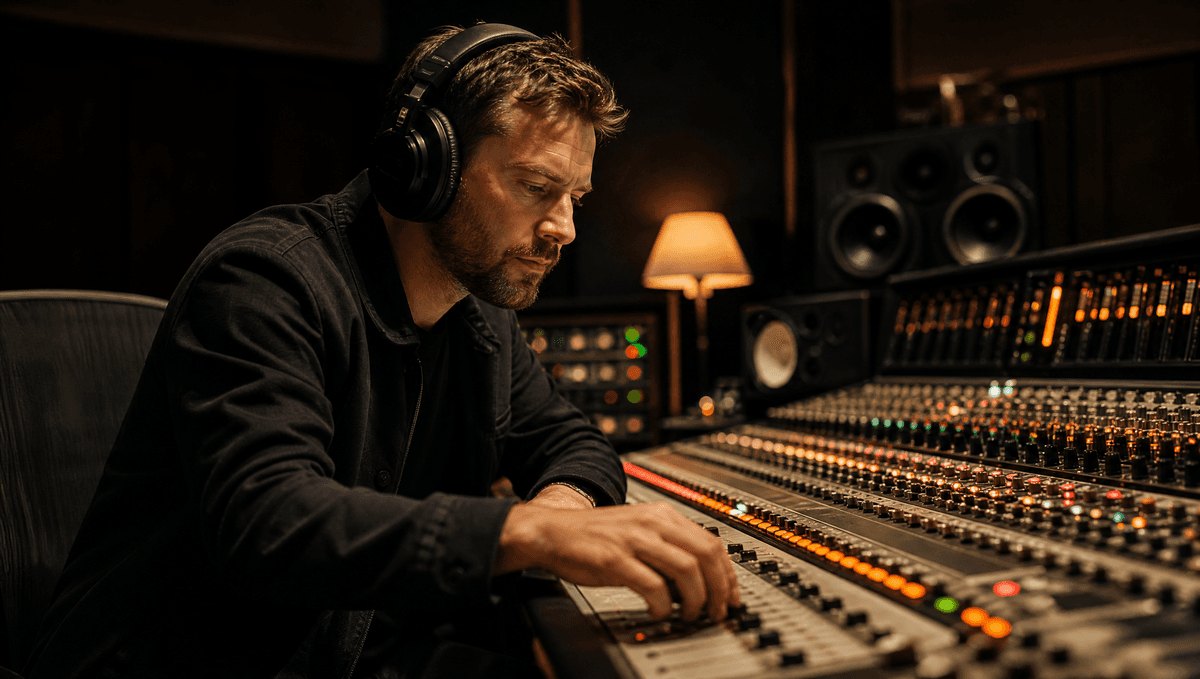
Recording in a professional podcast studio ensures the raw material is clean, balanced and visually consistent. That consistency makes post-production faster and clipping more effective. When every episode is recorded in the same controlled environment, with the same lighting and the same microphone setup, the AI tools have less variation to correct. The output is predictably high quality, which means less time fixing problems and more time building the distribution system that turns clips into business outcomes.
At THE LODGE Studios in London, we design every recording session around content that will be clipped, edited and distributed across multiple platforms. That means proper lighting for video, balanced audio for multi-speaker conversations, and a recording environment that eliminates the variables that slow down post-production. If your podcast strategy depends on short-form content working hard across social channels, the quality of the source recording is not negotiable.
If you are ready to record content that clips well and converts consistently, book a session at THE LODGE Studios. We handle the production environment so you can focus on the strategy that makes the content matter: https://book.thelodgestudios.co.uk.
The original Riverside article comparing Opus Clip alternatives can be found here: https://marketing.riverside.com/blog/best-opus-pro-alternatives.